Does Virtual Staging a Bathroom Help Sell a House? What Buyers Notice in Listing Photos
Virtual staging can make an empty bathroom easier to read in photos, but only when it clarifies scale, use, and condition without altering the room.
· Sophie
Virtual Staging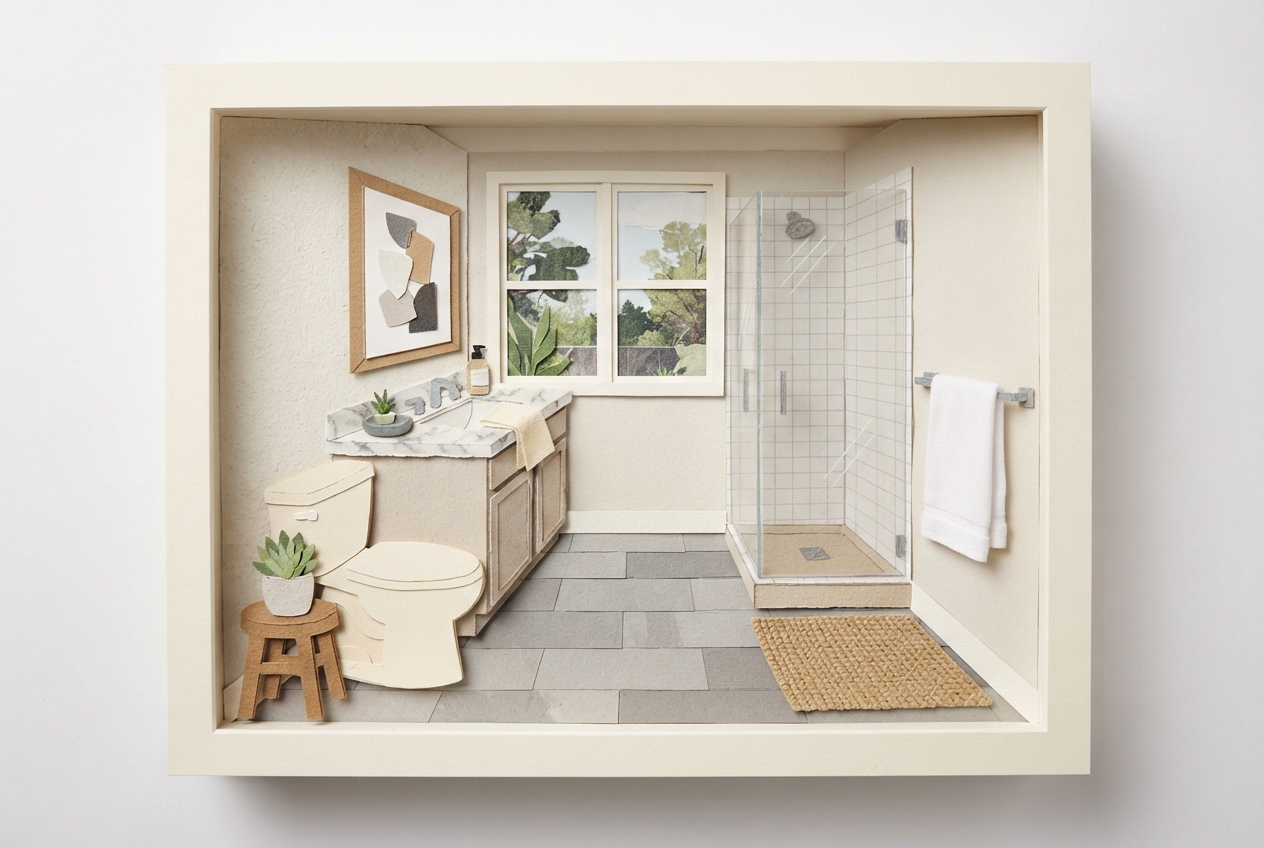
Does Virtual Staging a Bathroom Help Sell a House? What Buyers Notice in Listing Photos
A bathroom rarely wins a buyer over because of a decorative hand towel. It can, however, lose momentum when an empty photo makes the room feel cold, cramped, unfinished, or difficult to evaluate. Virtual staging a bathroom helps sell a house when it makes the room’s scale, purpose, and condition easier to understand in listing photos without changing what is actually there.
For listing agents, the question is not whether every bathroom needs styling. It does not. The better question is whether the current photo creates an unnecessary pause in the buyer’s mental walk-through. If a vacant bath reads as a construction site, a narrow pass-through, or an oddly proportioned blank box, restrained virtual staging can restore context. If the bathroom is already clean, updated, and clearly photographed, adding decorative items may simply add visual noise.
Direct answer: Virtual staging a bathroom can improve how buyers experience a listing because it gives them familiar scale cues and makes a vacant space feel cared for. It is most useful for primary baths, newly renovated bathrooms, and awkwardly photographed spaces. It should never conceal damage, invent fixtures, change tile or cabinetry, or misrepresent the property.
Why an empty bathroom can read differently than an empty bedroom
Buyers are accustomed to seeing an unfurnished bedroom. They may even expect it in a vacant home. Bathrooms are different because they are built around fixed elements, and buyers assess those elements quickly: vanity storage, counter space, shower size, lighting, cleanliness, and privacy.
With no towels, bath mat, or modest styling, the eye can land hard on the gaps. A wide wall beside a small vanity may make the vanity look undersized. An all-white bathroom can appear stark under a bright flash. A tight bathroom may feel tighter when there is nothing to establish the intended walking path. Even an attractive renovation can photograph as clinical when every surface is bare.
This is buyer psychology, not a case for turning a bathroom into a spa set. Buyers use listing photos to answer a rapid series of practical questions: Would two people get ready here? Is there a place for towels? Does this feel private? Is the shower generous or merely photographed from a favorable angle? Soft, believable context helps them read the room. It does not need to distract from it.
What buyers notice first in bathroom listing photos
A buyer may not consciously name every detail, but most bathroom photos are evaluated through a predictable visual sequence. Understanding that sequence helps you decide whether virtual staging will solve a real presentation issue.
1. Cleanliness and perceived maintenance
Bathrooms carry a higher cleanliness standard than almost any other room. Bare surfaces can look pristine in person yet sterile or slightly neglected in a photo, especially if lighting creates hard reflections on chrome, tile, or stone. A neatly placed towel and a simple bath mat can signal routine care and make the space feel lived in rather than abandoned.
That signal only works when the underlying room is ready. Virtual accessories cannot overcome stained grout, a visibly damaged vanity, missing trim, or poor photography. In fact, styling around a defect can draw more attention to the fact that something has been avoided.
2. Space around the fixed fixtures
Buyers need to judge circulation. Can someone open the vanity drawers? Is there clearance beside the toilet? Does the door swing into the room? A small stool, a narrow runner, or correctly scaled towels can provide reference points that help buyers interpret dimensions.
This is where inaccurate virtual staging causes trouble. An oversized freestanding tub, a too-narrow vanity stool, or accessories placed where a door must swing can make a photo feel subtly false. Worse, it can set expectations that collapse at the showing.
3. Whether the room supports daily routines
A primary bathroom is often evaluated as a morning-and-evening workflow, not just a collection of finishes. Buyers are looking for usable counter space, places to set products, towel access, and enough visual calm to imagine sharing the room.
A restrained virtual staging treatment might include folded towels, a tray placed on genuinely open counter space, and a small plant or stool where floor area permits. Those choices suggest use without pretending the bathroom has more storage or square footage than it does.
4. Light, color, and camera perspective
Bathrooms are full of reflective surfaces, so they reveal editing errors quickly. Impossible shadows, a plant with no reflection in a mirror, furniture that ignores perspective lines, or a bright window paired with contradictory interior lighting can make buyers skeptical even if they cannot articulate why.
The bathroom should look like the same room a buyer will visit. BetterSpace_2’s automatic staging is most useful here when it maintains realistic proportions and layout-accurate placement, rather than inventing architecture or applying lighting that conflicts with the original image.
When virtual staging a bathroom is worth doing
The strongest candidates are not necessarily the largest or most luxurious bathrooms. They are the bathrooms where the photo fails to communicate a clear, comfortable use case.
An empty primary bathroom often benefits. A primary bath carries emotional weight in a home search. When the vanity, shower, and open floor area are visible but the room feels echoing or unfinished, subtle staging can make the photo feel more legible and inviting. Think quality towels, a bath mat, limited countertop styling, and perhaps one small piece of furniture if the floor plan truly supports it.
A newly renovated bathroom can benefit from a light touch. Fresh tile and a new vanity deserve to be seen, not covered. Here, staging is less about furnishing the room and more about softening a showroom effect. One or two accessories may be enough to give the finishes scale and warmth.
A bathroom with an awkward footprint can benefit from context. Long, narrow baths and layouts with dead wall space can look strange in a single still image. Carefully positioned items can show that the open area is intentional or usable. If the layout cannot be explained honestly in one frame, include additional angles or a listing video rather than relying on virtual decor to solve it.
A guest bathroom can benefit when it is a visible part of the listing journey. If it appears near the main living area or accompanies guest bedrooms, a clean, lightly styled image reinforces the idea that visitors have a finished, comfortable space. This is less useful for a small powder room that already photographs clearly.
When to leave the bathroom unstaged
Not every blank room is a staging opportunity. A bathroom photo should be left alone when decor would compete with the buyer’s evaluation of the actual property.
Skip virtual staging when the bathroom is already furnished and tidy, when the central story is a distinctive tile installation or architectural feature, or when the room is too small for accessories to look natural. A half bath with a pedestal sink and one visible wall usually needs strong lighting, a straight camera angle, and a clean mirror more than virtual styling.
Also skip it when the needed improvement is physical rather than visual. If a bathroom lacks a mirror, has dated light fixtures, needs recaulked tile, or contains visible repair issues, address those facts in the preparation plan. Virtual staging is a presentation layer. It is not a renovation tool.
The bathroom staging choices that look believable in MLS photos
Bathroom staging works best when it is quieter than the room itself. Buyers should notice the vanity, shower, tile, and natural light before they notice the styling.
Use accessories that perform a visual job:
- Towels add softness and communicate towel-bar placement and scale.
- Bath mats or narrow runners help define floor area, provided they do not hide flooring or create an implausible path.
- A small stool or bench can give a large primary bath human scale, but only if there is enough clearance to use it.
- Minimal counter accessories can demonstrate genuine counter depth without obscuring the surface.
- A single plant or understated art piece can reduce the blank-wall effect in a room with enough light and visual space.
Avoid hotel-lobby excess: overflowing trays, multiple decorative bottles, elaborate floral arrangements, stacks of towels that would block a sink, or furniture squeezed beside a toilet. These choices do not help buyers understand the room. They make the photo feel designed for the camera instead of the home.
Accuracy matters more in bathrooms than agents may expect
A virtual stage should preserve the home’s real features, dimensions, and condition. In bathrooms, that means no added windows, no expanded shower, no replacement vanity, no hidden toilet, no altered countertop material, and no fixtures that imply an upgrade the buyer will not find at the property.
Use the original image as the fixed truth. The staging layer should respect door swings, mirror reflections, tile lines, sightlines, and the location of plumbing fixtures. When an item could not physically fit, it should not appear in the image.
Disclosure rules vary by market, MLS, and brokerage policy. Many agents label virtually staged images and retain the original photo for transparency. Check the applicable rules before publication, particularly when an image is used across the MLS, social media, property websites, and video. The point is straightforward: buyers should be able to recognize the actual bathroom at the showing.
A practical decision test before you stage the photo
Before adding virtual styling, look at the bathroom image at thumbnail size, then at full size. Ask three questions.
Can a buyer tell what the room is for and how it functions? If the layout is already obvious, staging may be unnecessary.
Does the empty room create a negative impression that is not true in person? A stark but newly updated primary bath may need context. A genuinely cramped bath does not need false spaciousness.
Can modest, physically plausible accessories improve the read without hiding anything? If yes, virtual staging is a sensible option. If no, reshoot the room, improve the lighting, change the angle, or let the fixed finishes carry the image.
The goal is not to make every bathroom memorable. It is to prevent an avoidable blank-space reaction from interrupting a buyer’s interest in the home. With realistic scale, accurate placement, and light-touch styling, a virtual staging bathroom image can make the listing feel more complete while leaving the property itself fully recognizable.
For agents working from vacant-property photography, BetterSpace_2 can help create that kind of layout-aware staging quickly, alongside listing video assets. The best use is selective: stage the bathroom when it clarifies the buyer’s experience, and leave it alone when the room already speaks clearly for itself.